 Author:
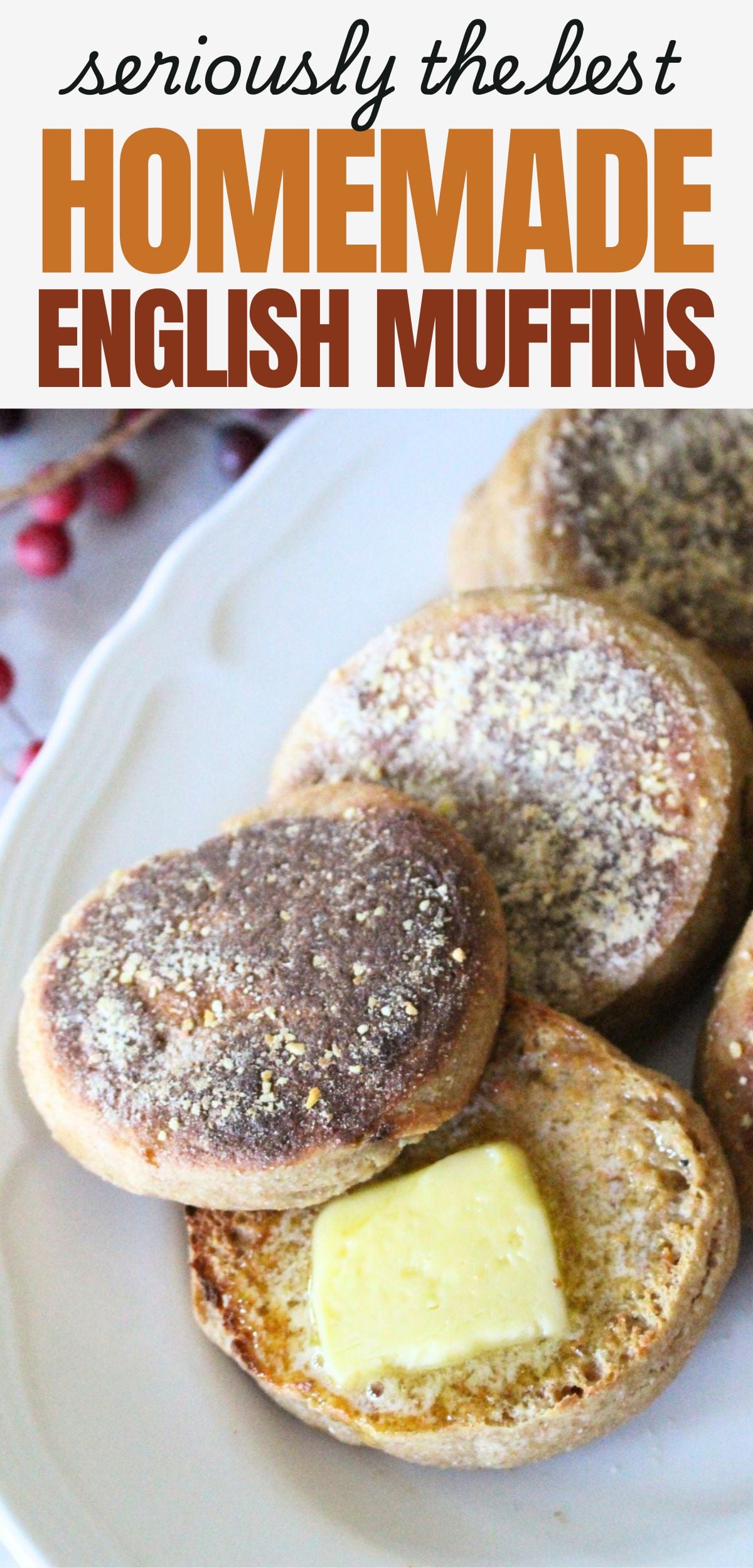
 English muffins are a delightful breakfast option, and homemade English muffins are even better! Made with fresh milled flour, these English muffins are fluffy and perfect for spreading with jam and butter!
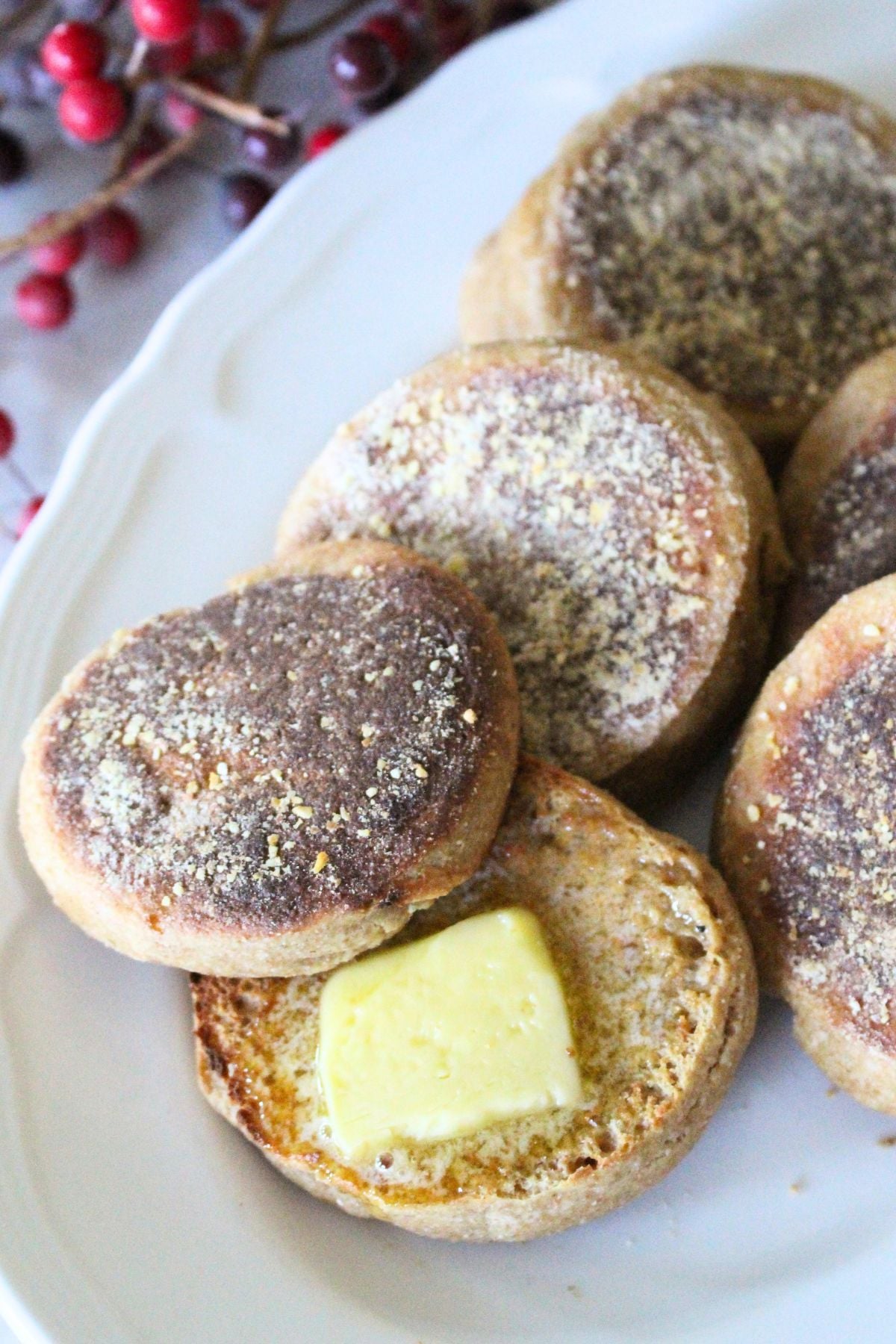
My mom loved the classic Thomas’ English muffins when I was growing up. We always had a package of them in the house, it seemed. She would slice and toast one, then cover it with homemade lemon curd to have along with her coffee in the morning.
We never tried making our own, and I’m not really sure why! But once we discovered a gluten intolerance in the family, all store-bought bread products were out. Flash forward 10 years, to when we discovered einkorn flour, and I started making all our bread products!
I have been wanting to make homemade English muffins for my mom for the last 12 years, but I just haven’t gotten around to it! So, recently, as I was testing recipe conversions for our new app, The Einkorn Kitchen, I tried an English muffin recipe that was originally for modern wheat. The app converted it for fresh milled einkorn, and I just followed the conversion!
They turned out so perfectly that I wanted to share them with you!
Homemade English Muffins
Fluffy, full of holes, and perfect for breakfast, English muffins are a staple in many homes! If you want to make your own homemade English muffins with fresh milled flour, this recipe is exactly what you need!
Note: If you want to convert this recipe for all-purpose or whole wheat einkorn flour, just download The Einkorn Kitchen and let the app do it for you!
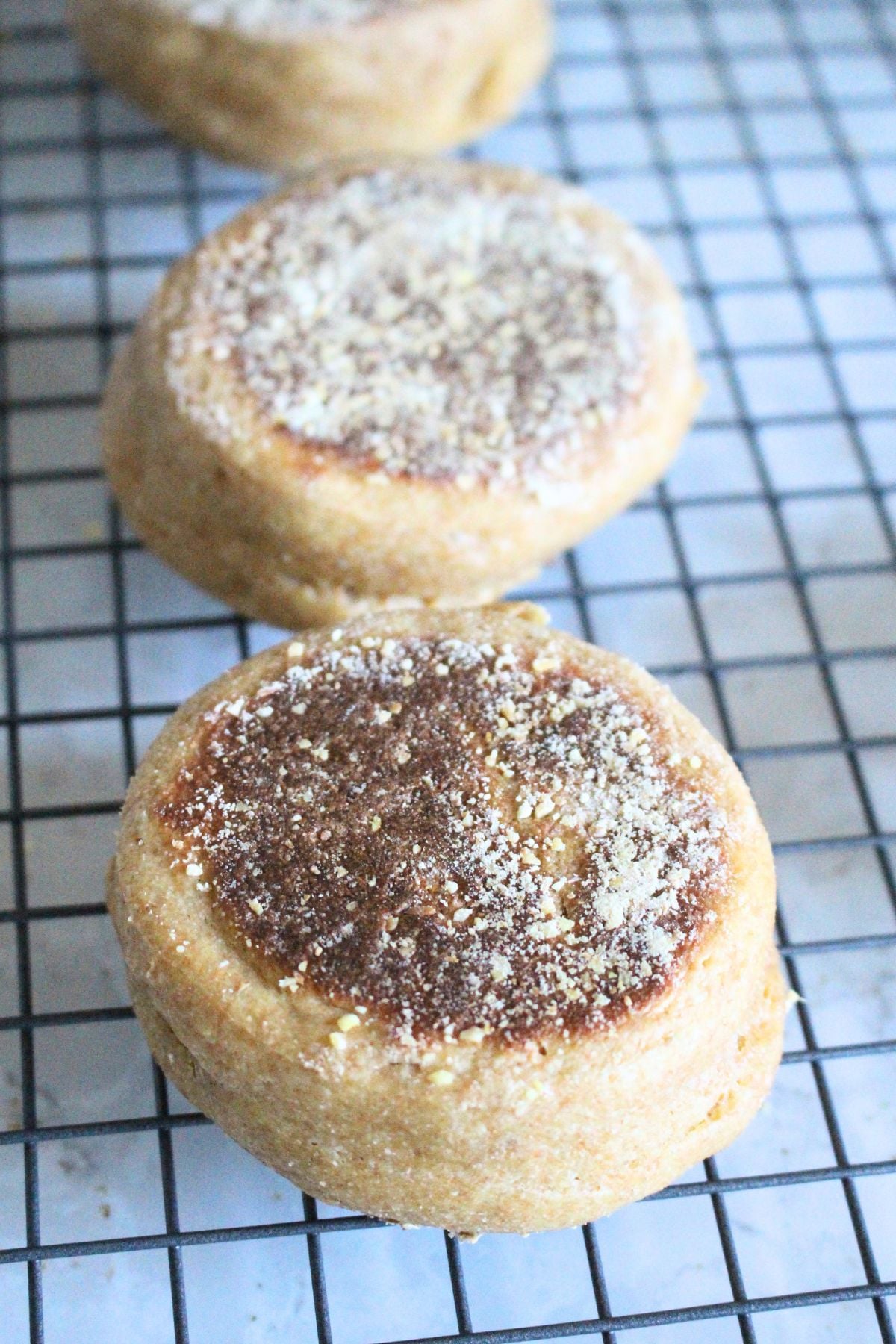
Ingredients
The ingredients for this recipe are very simple and are almost exactly what are called for in many other breads! However, adding the skillet cooking at the end helps turn them into their classic shape and flavor! Full measurements can be found on the printable version of the recipe below, but I wanted to cover some of the common substitutions that are often asked about here.
- Milk – We use whole milk, but any type of animal or plant milk that you have will work!
- Maple Syrup – Granulated white sugar is typically called for, but we prefer maple syrup. Use any sweetener you want though, as long as it will feed the yeast! Stevia and no-calorie sweeteners will not.
- Yeast – We have used both dry active and instant yeast for this recipe, and prefer instant yeast. If you want to use dry active, just take 1/4 cup of liquid from the total called for in the recipe and heat it to 110°F. Add the yeast and sweetener and mix well. Allow to bloom for 5 minutes before continuing with the rest of the recipe.
- Flour – We use fresh milled einkorn flour, but if you want to convert to all-purpose or whole wheat einkorn, you can use The Einkorn Kitchen app to convert this recipe instantly! If you are using fresh milled modern wheat, you will need to increase the liquid by about 1/4 cup.
- Salt – Skip the table salt if you can, and use a high-quality sea salt for best results!
- Butter – Both salted and unsalted butter work well in this recipe, but we tend to use salted.
- Egg – Use a whole egg to help condition the dough. Don’t skip if you can help it!
- Cornmeal – This is used for dusting the skillet during baking and gives the classic English muffin texture to the finished bread. Semolina can be used instead, but either way, make sure that the cornmeal is very fine, or it will cook to a hard texture and be very crunchy on your muffins, which is not desirable!
Instructions
It took me so long to make my own English muffins because I thought the process would be too overwhelming! However, if you’ve ever made homemade yeast rolls, cut-out biscuits, or pancakes, you can make these English muffins!
- Heat – Combine the milk, water, and maple syrup (or sweetener of choice) in a small pan and heat to 110°F. If using dry active yeast, add the yeast to the mix and set aside for 5 minutes before continuing. Otherwise, continue on as normal.
- Combine – Add the flour, salt, and yeast (if using instant) to the bowl of an electric mixer with a paddle attachment (not a dough hook!). Mix briefly to combine.
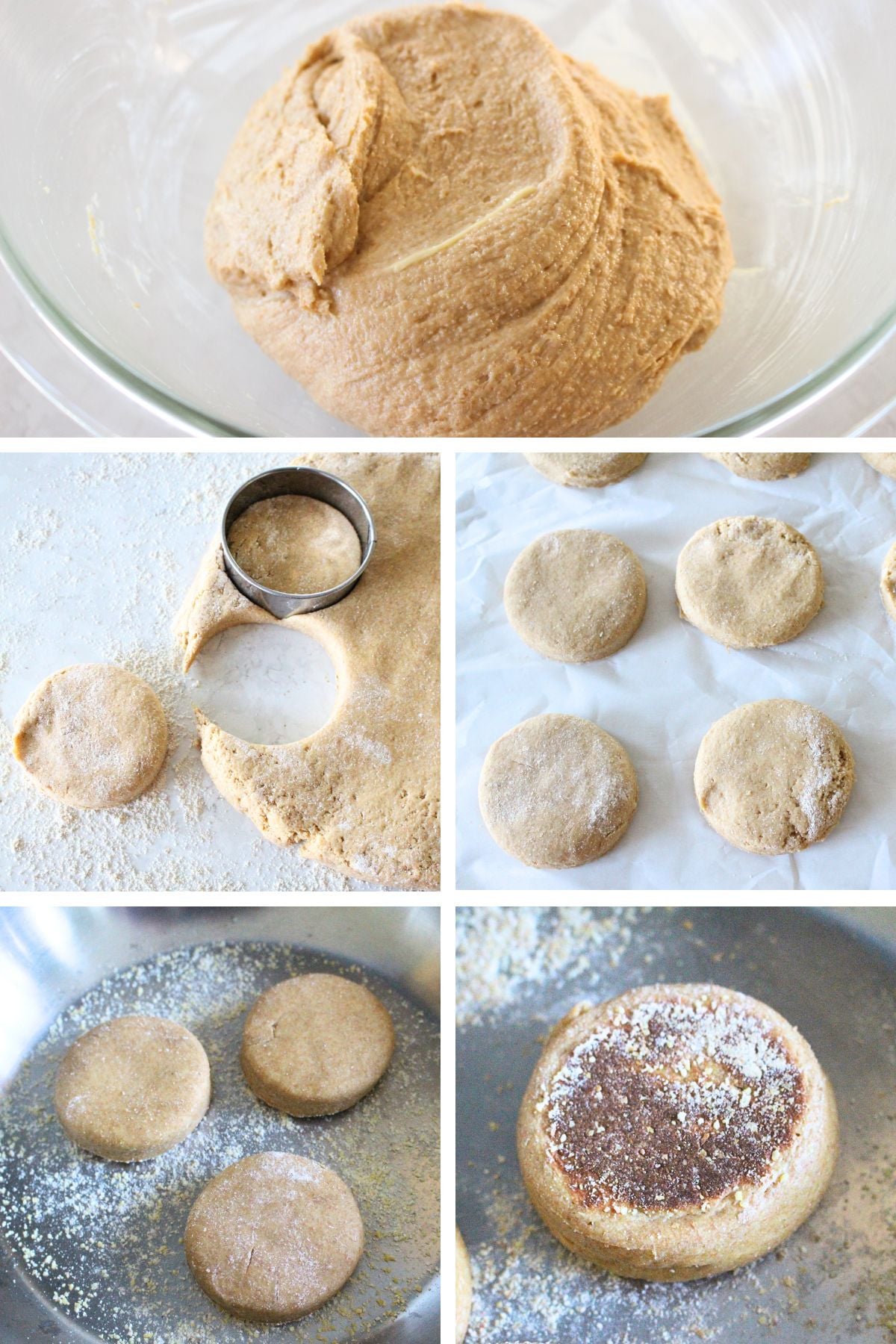
- Add – Into the milk/butter mix, add the egg and melted butter. Pour into the flour mix while mixing on low. Raise the speed to medium and mix for 7 minutes, or until the dough is smooth. It will be fairly sticky, but should hold its form when shaped (see the top image in the collage above).
- Rise – Transfer the dough to a buttered bowl and cover for about an hour. You can let the dough rise overnight in the fridge, instead. If you do that, just let it warm up on the counter for about an hour in the morning.
- Shape – Transfer the dough to a floured surface and flour the top. Gently roll or press the dough out until it’s about 3/4″ thick. On another clean surface, or on a parchment-lined baking tray, sprinkle with cornmeal or semolina for the cut dough pieces. Use a 2 1/2″ round cutter and cut as many muffins out as you can. Place them on the cornmeal-dusted area. Repeat until all dough is gone, re-rolling the scraps as needed.
- Second Rise – Let the biscuits rest for about 30 minutes.
- Cook – Heat a large skillet over medium heat. Once heated, sprinkle the surface with cornmeal/semolina and add 3 muffins to the pan. I would keep the muffins to 3, as they can be tough to flip until you get the hang of it! Cover the pan and reduce the heat to medium-low, then cook for 6 minutes until each piece is browned on the bottom and the top appears dry. Then, flip each muffin and cook for another 6 minutes, until browned on the other side.
- Repeat – After each round (both sides), remove the finished muffins and clear out the old cornmeal. I do this with a basting brush and just sweep the cornmeal into my kitchen scraps bowl. Add fresh cornmeal/semolina and cook the next batch. Repeat until all muffins are cooked and enjoy them hot!
- Toast – While optional, toasting these English muffins really brings out all the little characteristic holes in the bread!
Even More Delicious Breakfast Recipes
Homemade English Muffins
Ingredients
- 2/3 cup milk
- 1/3 cup water
- 2 tablespoons maple syrup
- 9 g instant yeast (1 packet, or 2 1/4 tsp)
- 3 cups fresh milled flour (360g) We use einkorn
- 1 teaspoon salt
- 3 tablespoons butter melted
- 1 large egg
- Cornmeal or Semolina
Instructions
- Heat – Combine the milk, water, and maple syrup (or sweetener of choice) in a small pan and heat to 110°F. If using dry active yeast, add the yeast to the mix and set aside for 5 minutes before continuing. Otherwise, continue on as normal.
- Combine – Add the flour, salt, and yeast (if using instant) to the bowl of an electric mixer with a paddle attachment (not a dough hook!). Mix briefly to combine.
- Add – Into the milk/butter mix, add the egg and melted butter. Pour into the flour mix while mixing on low. Raise the speed to medium and mix for 7 minutes, or until the dough is smooth. It will be fairly sticky, but should hold its form when shaped (see the top image in the collage above).
- Rise – Transfer the dough to a buttered bowl and cover for about an hour. You can let the dough rise overnight in the fridge, instead. If you do that, just let it warm up on the counter for about an hour in the morning.
- Shape – Transfer the dough to a floured surface and flour the top. Gently roll or press the dough out until it’s about 3/4″ thick. On another clean surface, or on a parchment-lined baking tray, sprinkle with cornmeal or semolina for the cut dough pieces. Use a 2 1/2″ round cutter and cut as many muffins out as you can. Place them on the cornmeal-dusted area. Repeat until all dough is gone, re-rolling the scraps as needed.
- Second Rise – Let the biscuits rest for about 30 minutes.
- Cook – Heat a large skillet over medium heat. Once heated, sprinkle the surface with cornmeal/semolina and add 3 muffins to the pan. I would keep the muffins to 3, as they can be tough to flip until you get the hang of it! Cover the pan and reduce the heat to medium-low, then cook for 6 minutes until each piece is browned on the bottom and the top appears dry. Then, flip each muffin and cook for another 6 minutes, until browned on the other side.
- Repeat – After each round (both sides), remove the finished muffins and clear out the old cornmeal. I do this with a basting brush and just sweep the cornmeal into my kitchen scraps bowl. Add fresh cornmeal/semolina and cook the next batch. Repeat until all muffins are cooked and enjoy them hot!
- Toast – While optional, toasting these English muffins really brings out all the little characteristic holes in the bread!
Notes
Ingredients
Here is a quick look at the ingredients and any possible substitutions.- Milk – We use whole milk, but any type of animal or plant milk that you have will work!
- Maple Syrup – Granulated white sugar is typically called for, but we prefer maple syrup. Use any sweetener you want though, as long as it will feed the yeast! Stevia and no-calorie sweeteners will not.
- Yeast – We have used both dry active and instant yeast for this recipe, and prefer instant yeast. If you want to use dry active, just take 1/4 cup of liquid from the total called for in the recipe and heat it to 110°F. Add the yeast and sweetener and mix well. Allow to bloom for 5 minutes before continuing with the rest of the recipe.
- Flour – We use fresh milled einkorn flour, but if you want to convert to all-purpose or whole wheat einkorn, you can use The Einkorn Kitchen app to convert this recipe instantly! If you are using fresh milled modern wheat, you will need to increase the liquid by about 1/4 cup.
- Salt – Skip the table salt if you can, and use a high-quality sea salt for best results!
- Butter – Both salted and unsalted butter work well in this recipe, but we tend to use salted.
- Egg – Use a whole egg to help condition the dough. Don’t skip if you can help it!
- Cornmeal – This is used for dusting the skillet during baking and gives the classic English muffin texture to the finished bread. Semolina can be used instead, but either way, make sure that the cornmeal is very fine, or it will cook to a hard texture and be very crunchy on your muffins, which is not desirable!
Nutrition
Pin this for Later!

Leave a Reply